

-
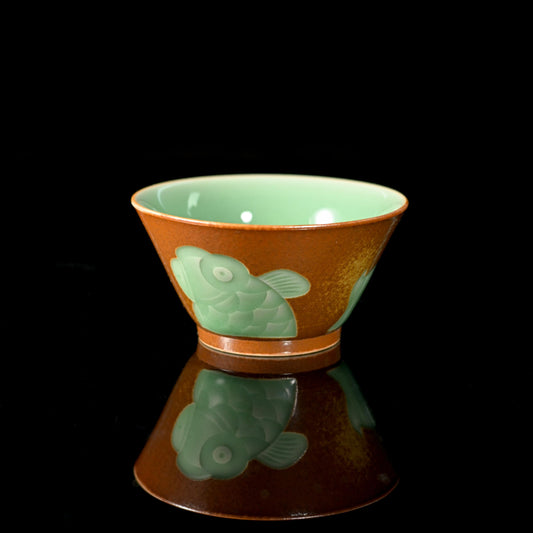
Longquan Celadon Fish Scale Pattern Vintage Glaze Gaiwan( Tea Bowl
Regular price $39.90 USDRegular price -
Longquan Celadon Iron Clay Dark Green Tea Canister 400ml
Regular price $59.00 USDRegular price -
Longquan Celadon Plum Green Glaze Baoxiang Teacup Set 80ml
Regular price $58.00 USDRegular price -
Longquan Celadon Dragon-Fish Plum Green Wood Ash Teacup 90ml
Regular price $62.00 USDRegular price -
Longquan Celadon Ash and Plum Green Glaze Hand-Carved Fish Pattern Master Teacup
Regular price $48.00 USDRegular price -
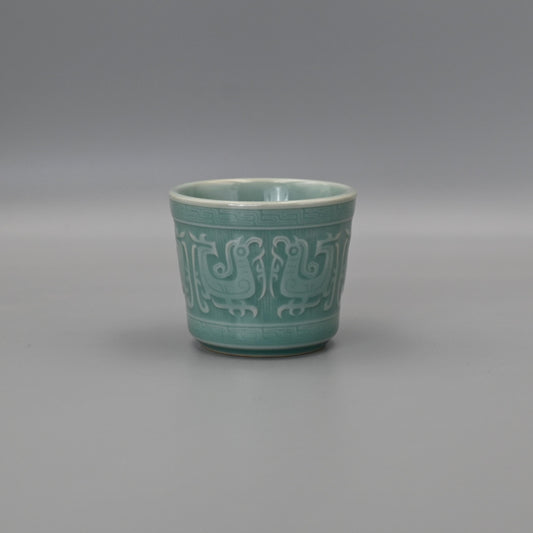
Longquan Celadon Celestial Blue Six-Phoenix Totem Master’s Cup
Regular price $29.90 USDRegular price -
Celadon Yaozhou Olive-Green Glaze Embossment Teapot Plate
Regular price $79.00 USDRegular price -
Longquan Celadon Plum-Green Magnolia Teapot Tray
Regular price $72.00 USDRegular price -
Longquan Celadon Teacup - Handmade Embossed Dragon Design 125ml
Regular price $108.00 USDRegular price -
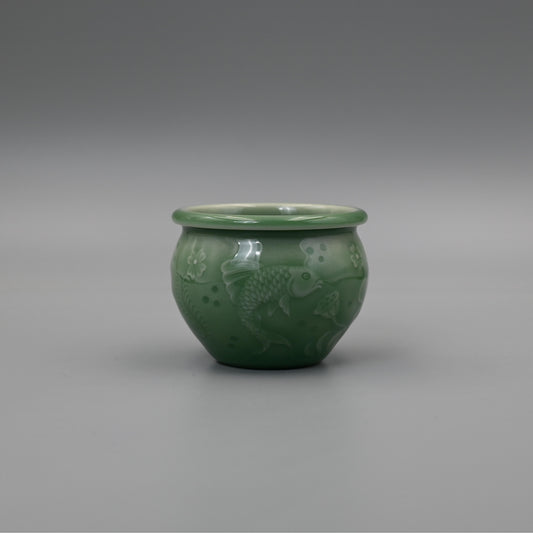
Longquan Celadon Plum Green Hand-Carved Fish and Algae Pattern Host Tea Cup
Regular price $54.90 USDRegular price





Collection: Celadon
Our Longquan celadon collection features the iconic Meiziqing (Plum Green) and Fenqing (Pale Blue) glazes, heritage crafts from the famous kilns of Zhejiang. Each piece is selected for its jade-like texture and historical authenticity. Whether you are looking for a handcrafted celadon gaiwan or a complete Kung Fu tea set, our collection embodies the serene beauty of Song Dynasty aesthetics.
Learn More About Celadon
What is Celadon?
Celadon is a high-fired ceramic with a jade-like glaze, ranging from pale green to deep emerald. It has been admired since ancient China for its elegance and smooth texture.Celadon is divided into Ge-kiln and Di-kiln.
Where is Celadon produce?
Celadon originated in China, with Longquan celadon being the most famous. Known for its jade-like glaze and elegant shapes, Longquan celadon is highly regarded for its exceptional quality and craftsmanship.
Differences of Ge Kiln vs. Di Kiln
- Ge Kiln – Crackled Beauty
Ge Kiln ceramics are famous for their fine crackle patterns, which naturally form on the glaze during cooling. The glaze is thick and glassy, with colors like grayish-blue or rice-yellow. A special feature is “Purple Rim and Iron Foot”— the rim has a purple tint, and the base appears dark due to unglazed clay.
- Di Kiln – Smooth Perfection
Di Kiln, also known as Longquan Celadon's younger branch, was historically associated with Longquan kilns in Zhejiang Province. Di Kiln ceramics have a thicker body and a smooth, flawless green glaze without crackles. They look glossy, bright, and jade-like, giving a fresh and pure aesthetic.
What makes Celadon special?
- Jade-like beauty – The glaze creates a soft, glossy finish.
- Crackle patterns – Unique, natural crackles form in the glaze.
- Durability – Fired at high temperatures, making it strong and long-lasting.
Why does Celadon have crackle patterns?
The crackles form naturally due to differences in glaze and clay contraction. Originally seen as a flaw, they are now valued as an artistic feature.
Does Celadon absorb tea like Yixing teapots?
No, Celadon is glazed, preventing it from absorbing flavors, making it suitable for different teas.
How should I care for Celadon?
Cleaning:
Rinse with warm water after use, no soap.
Use a soft brush or cloth for stains.
Storage:
Keep in a dry, cool place away from sunlight and chemicals.
Avoid Temperature Changes:
Don’t expose it to sudden temperature changes, like pouring boiling water into a cold teapot.
Handle Carefully:
Avoid dropping or bumping it, as celadon is fragile.
Regular Use:
Using it regularly can enhance its shine and flavor over time.